Why Your Neck Gets Worse in Cold Weather
Quick Answer: Cold triggers a protective hunch — shoulders up, head forward, chest closed — that is essentially identical to the tech neck posture, and you hold it every time you step outside. Add heavier coats and bags, less outdoor movement, and reduced tissue compliance, and you get the same neck loaded for more hours a day. The fixes: dress so you are not bracing, warm up before your commute, and reset the position deliberately several times a day.
Nothing about your setup changed. The monitor is where it was, the phone habits are the same, and your neck is tighter than it was in August.
Cold produces a postural response that looks exactly like the posture you have been trying to correct — and because you are not at a desk when it happens, it never occurs to you to count it. The third section covers why this often shows up as jaw and headache symptoms rather than neck ones.

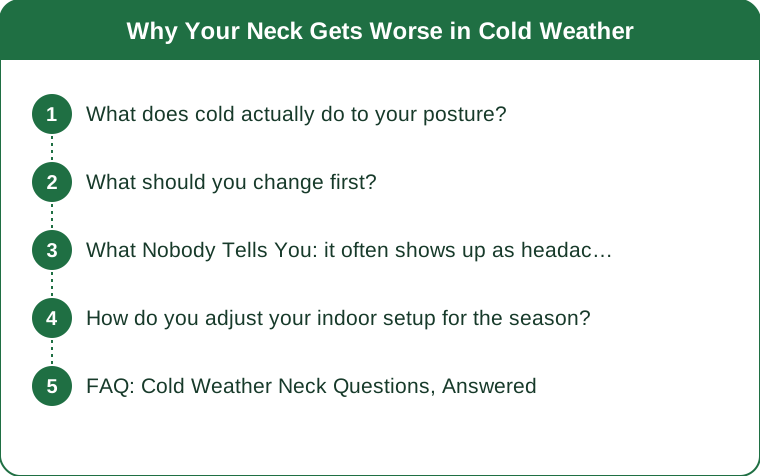
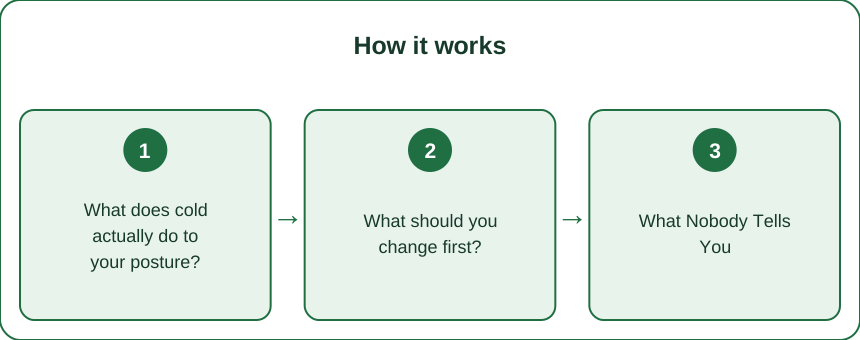
What does cold actually do to your posture?
It triggers a defensive package, and every element of it works against your neck.
The protective hunch. Cold exposure produces a reflexive shortening — shoulders elevated toward the ears, head drawn forward and down, arms tucked in, chest closed. This is a heat-conservation posture: it reduces exposed surface area and protects the neck and chest.
Compare that to the classic forward head posture: shoulders elevated and protracted, head forward, thoracic spine flexed. They are the same shape. So every minute you spend cold, you are rehearsing the exact posture that causes the problem.
Muscles brace and stay braced. Shivering and pre-shivering muscle tone means the upper trapezius, levator scapulae, and the muscles at the base of your skull are working continuously rather than intermittently. Sustained low-level contraction is what produces the deep ache.
Tissue is less compliant when cold. Muscle and fascia are stiffer at lower temperatures, so the same movement meets more resistance and you move less freely.
Breathing changes. Cold air and a closed chest push you toward shallow, upper-chest breathing, which recruits the accessory breathing muscles in your neck — the scalenes and sternocleidomastoid. These muscles doing breathing work all day is a direct contributor to neck tightness, and it is completely invisible as a cause.
You move less. Fewer walks, less time outside, more time seated indoors. Movement is what breaks up sustained postures, and there is less of it.
What should you change first?
Address the cause of the hunch rather than the hunch itself.
Dress so your neck and shoulders are actually warm. This sounds too simple. It is the highest-value intervention available. A scarf and a coat with a collar that covers the back of the neck removes the reason for the hunch, and the posture normalizes without you having to think about it. Most people dress their torso well and leave the neck exposed, which is precisely where the reflex is triggered.
Warm hands too. Cold hands cause you to tuck your arms in and shrug, which pulls everything forward. Gloves are a neck intervention.
Warm up before you go out, not after. Thirty seconds of shoulder rolls and arm swings before stepping outside raises tissue temperature and gets you moving into the cold rather than tensing into it.
Reset deliberately when you come inside. The hunch does not release on its own — you carry it to your desk and it becomes your working posture. Roll your shoulders back and down, take three slow breaths into your lower ribs, and let your head come back over your shoulders. Twenty seconds, every time you come in from outside.
Watch the coat-plus-bag combination. A heavy coat restricts shoulder movement, and a bag strap over it concentrates pressure. Switch shoulders, or move to a backpack with both straps.
Keep breathing low. A few minutes a day of deliberate diaphragmatic breathing takes work off the neck muscles that have been quietly doing it.

What Nobody Tells You: it often shows up as headaches and jaw pain first
The neck is not always where you notice this, which is why the seasonal pattern goes unrecognized.
The muscles at the base of the skull refer pain upward. The suboccipital muscles — small muscles connecting your skull to your upper cervical spine — are heavily involved in the forward head position, and when they are chronically tight they produce a headache that presents at the back of the head, behind the eyes, or across the temples. This is a well-described pattern and it is frequently attributed to eye strain, screens, or stress rather than to posture.
The jaw is mechanically linked to head position. When your head sits forward of your shoulders, the resting position of your jaw changes, and the muscles that control it compensate. Cold weather adds direct jaw clenching on top of that — clenching is part of the cold-bracing response, and many people do it every time they step outside without any awareness of it.
So the seasonal presentation is often: tension headaches starting in late autumn, jaw soreness or morning tightness, and only then the neck. Because the neck is not the loudest symptom, the postural cause goes unexamined.
Two specific checks worth doing:
Notice your jaw the moment you step outside. Most people find their teeth are together and their jaw is set. Deliberately dropping the jaw — teeth slightly apart, tongue resting on the roof of the mouth — is a two-second habit with a real effect.
Notice your shoulders at a red light or a bus stop. Standing still in the cold is where the hunch is deepest, because you have no movement generating heat. Drop them consciously.
Headaches that are new, severe, changing in pattern, or accompanied by any neurological symptoms need medical assessment rather than a posture fix. This is general information, not medical advice.
How do you adjust your indoor setup for the season?
The outdoor cause changes your indoor tolerance, so the desk needs a little more from you now.
Check the temperature at your desk. A cold office produces the same bracing indoors, all day. If your workspace is genuinely cold, a warm layer over the shoulders does more for your neck than any ergonomic adjustment.
Watch the draft. A cold draft on one side of your neck produces asymmetric tension and is a classic cause of a stiff neck that seems to arrive overnight. Reposition your chair rather than enduring it.
Move more, in smaller doses. Since you are walking less outside, indoor movement has to make up for it. A two-minute reset every half hour beats one long stretch session.
Three resets worth doing: chin tucks to reposition the head over the shoulders, shoulder blade squeezes to counter protraction, and a doorway chest stretch to open what the hunch closed.
Reconsider the phone specifically. Cold weather means gloves, which means holding the phone differently and often closer to your face at a worse angle. It also means checking it while standing still outside, which is the deepest-hunch moment of your day.
Sleep setup matters more now. A colder room means you curl up more, and a side-sleeper who curls tightly with a pillow that is too low or too high spends eight hours reinforcing the daytime position. This is worth checking at the start of the season.
Keep some outdoor movement. The most protective thing for your neck across a winter is not a stretch routine — it is continuing to walk. A short walk in appropriate clothing is entirely different from standing in the cold underdressed, and the difference is the whole point.
FAQ: Cold Weather Neck Questions, Answered
Does cold weather actually cause neck pain or just reveal it?
Mostly it amplifies an existing pattern. Cold does not create forward head posture, but it adds hours of the same position, increases muscle tone, and reduces the movement that would otherwise break it up. If your neck was borderline in summer, winter tips it over.
Would a heat pack help?
For symptom relief, often yes — heat increases tissue compliance and reduces the guarding response, which makes movement and stretching more productive. It is a way to make the actual interventions work better rather than a fix on its own.
Why does my neck feel worse in the morning in winter?
A colder bedroom means more curling up overnight and stiffer tissue on waking. Check your pillow height for your sleeping position, and give yourself a few minutes of gentle movement before demanding full range from your neck.
TL;DR:
- Cold triggers a protective hunch that is postually identical to tech neck, and you hold it every time you go out.
- Braced muscles, stiffer tissue, and upper-chest breathing all add load to the same structures.
- Warming your neck and hands removes the reason for the hunch — a scarf is a real intervention.
- It often presents as tension headaches and jaw tightness before it presents as neck pain.
- Reset deliberately every time you come inside, and keep walking rather than retreating indoors.
The reason this pattern goes unnoticed for so long is that the cause happens outside the room where the symptom shows up. You correct your monitor height and your chair and your phone habits, and then you spend twenty minutes a day braced at a bus stop with your shoulders around your ears and never count it. Put the scarf on, drop your jaw when you step out the door, and give yourself twenty seconds to unwind when you come back in. It is a genuinely small intervention for a problem that otherwise runs until spring.
Keep Reading
This article is for general informational purposes only and is not medical advice. Always consult a qualified health professional for guidance specific to you.