Tech Neck: The 4-Move Reset for the Hours Your Head Spends Ahead of Your Spine
Quick Answer: Every inch your head drifts forward roughly doubles the effective load on your neck muscles — at a typical 45° phone angle, your 10-12 lb head loads the neck like it weighs 50-60 lbs. The fix isn’t ‘perfect posture’; it’s frequent position changes plus a daily 4-move reset: chin tucks, doorway pec stretch, thoracic extension, and band pull-aparts.
By 3pm, you know the feeling: a dull band of ache from the base of your skull into your shoulders, and that one knot by your shoulder blade that’s basically a roommate now. It’s not mysterious. Your head — a bowling ball on a stalk — has spent six hours cantilevered over a screen, and the muscles holding the cable tension are billing you for overtime.

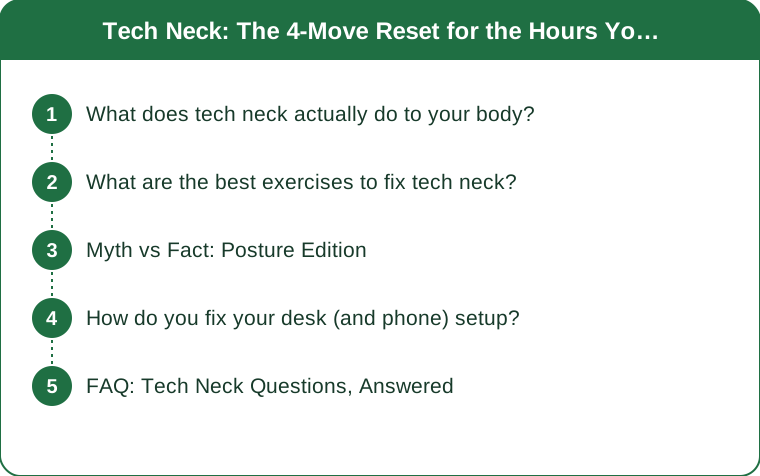
What does tech neck actually do to your body?
The physics: your head weighs 10-12 pounds at neutral. Spine researchers modeling head-forward postures found the effective load climbs steeply with angle — roughly 27 lbs at 15°, 40 lbs at 30°, and 49 lbs at 45°, which is standard phone-scrolling geometry.
Your neck extensors and upper traps hold that isometric contraction for hours, which is why the ache is muscular fatigue more than ‘damage.’ Over months, the pattern trains in: tight chest and neck extensors, lengthened-and-weak deep neck flexors and mid-back — the rounded silhouette that makes you look more tired than you are.
Beyond the ache: tension-type headaches that start at the skull base, that between-the-shoulder-blades burn, and for some people jaw tension — the whole upper-crossed package. The encouraging part: it’s remarkably responsive to small, consistent inputs.
What are the best exercises to fix tech neck?
The 4-move reset — 5 minutes, once or twice daily:
- Chin tucks, 2×10 (hold 5s). Glide your head straight back like making a double chin — this is THE deep-neck-flexor exercise, the one physios build every neck program around. Do it against a wall for feedback.
- Doorway pec stretch, 3×30s. Forearm on the frame, elbow at shoulder height, step through gently. Releases the front of the pattern.
- Thoracic extension over a chair back (or foam roller), 10 slow reps. Your mid-back’s stiffness is why your neck overworks — un-stiffen the segment that’s supposed to extend.
- Band pull-aparts, 2×15. Strengthens the mid-back muscles that hold your shoulder blades — and therefore your head — home.
Consistency math: this beats a monthly massage because the massage undoes the knot while the reset retrains the loading. Do both if you like — but if you pick one, pick the daily five minutes.
Myth vs Fact: Posture Edition
Myth: There’s one correct posture and you should hold it all day. Fact: The research consensus has shifted — your best posture is your next posture. Static ‘perfect’ sitting fatigues tissues just like slouching does. Movement variability beats positional perfection.
Myth: Posture correctors fix forward head posture. Fact: Passive braces remind you, but worn constantly they let the very muscles you need get lazier. Fine as a 1-2 hour cue; not a solution.
Myth: Tech neck means permanent damage by 40. Fact: Muscles and habits retrain at any age. Most people feel meaningfully better within 2-4 weeks of daily resets plus environment fixes. The ‘dowager’s hump is inevitable’ fear-mongering isn’t supported.
Myth: A standing desk solves it. Fact: You can crane your neck at a standing desk beautifully. The variable that matters is screen position and change frequency, not sitting versus standing.
How do you fix your desk (and phone) setup?
The environment does half the work:
- Screen top at eye level, arm’s length away. Laptop users: this requires a stand + external keyboard (~$40 total). The laptop’s built-in geometry is the tech-neck machine.
- Phone at chest-to-eye height, elbows supported — the 45° down-gaze is the 50 lb setting. Raising the phone to chin height cuts the angle by more than half.
- The 20-20-20-ish rule, adapted for necks: every 30 minutes, 30 seconds of movement — stand, roll shoulders, do 2 chin tucks. Set a timer for a week; after that it self-installs.
- Sleep audit: stomach sleeping twists the neck for hours; a pillow that’s too high flexes it forward all night. Side sleepers want the pillow filling the shoulder gap, keeping the neck level.
When to escalate: pain radiating down an arm, numbness or tingling in hands, headaches that worsen or wake you, or pain after any accident. Those are past ‘ergonomics’ — see a doctor or physio. Everything else responds shockingly well to five daily minutes and a $25 laptop stand.
FAQ: Tech Neck Questions, Answered
How long does it take to fix tech neck?
Most people feel less daily ache within 2-4 weeks of consistent resets and screen fixes. Rebuilding the strength pattern takes 8-12 weeks. Years of habit don’t need years of fixing — but they do need daily minutes.
Can tech neck cause headaches?
Yes — cervicogenic and tension-type headaches commonly start at the skull base where strained neck extensors attach, then wrap forward. If your headaches ease after the doorway stretch and chin tucks, you’ve found a big contributor.
Do I need a special pillow?
You need the right height, not a specific brand: side sleepers usually need a taller pillow than back sleepers, and stomach sleeping fights every fix on this page. Get the daily reset and desk setup right first — they’re cheaper than the pillow-shopping rabbit hole.
TL;DR:
- Head forward = load multiplied: ~50 lbs of effective neck load at phone angle
- Daily 4-move reset: chin tucks, doorway stretch, thoracic extension, pull-aparts
- Screen to eye level; phone up to chin height; move every 30 minutes
- Best posture = next posture; correctors and standing desks aren’t the fix
- Arm pain, numbness, or worsening headaches → professional evaluation
Your neck isn’t asking for a new life — just eye-level screens and five honest minutes a day.
Keep Reading
This article is for general informational purposes only and is not medical advice. Always consult a qualified health professional for guidance specific to you.